Returning to Exercise After Birth: The Realistic Timeline Nobody Gives You
The six-week clearance is where postpartum exercise advice usually starts and stops — a single checkpoint standing in for a months-long physiological recovery — and mothers deserve the fuller map. The realistic return timeline: the phases, the framework and the signs that outrank any calendar.

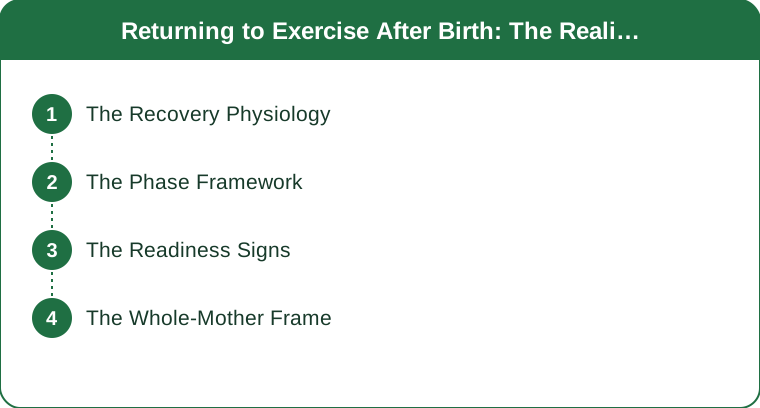
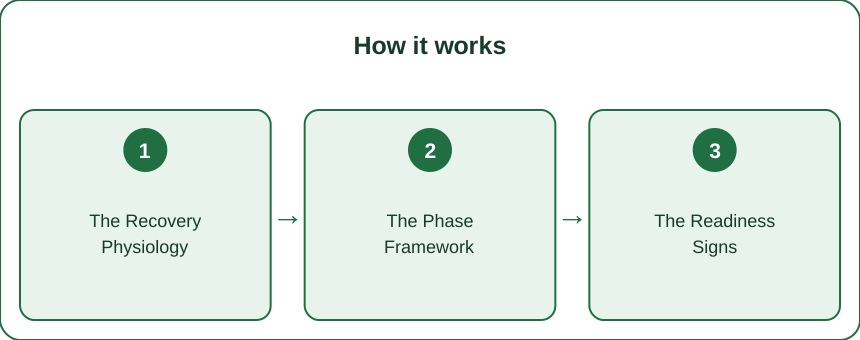
The Recovery Physiology
What’s actually healing: the tissue timeline (the uterus, abdominal wall and pelvic floor on months-long schedules — the birth as a major physical event whether vaginal or cesarean; the six-week mark being tissue-early, not tissue-done), the relaxin reality (the joint-loosening hormones lingering months, longer with breastfeeding — the sprain-and-strain susceptibility from the pregnancy chapters continuing), the abdominal-separation picture (the diastasis that’s universal at birth and variably resolving — the gap check and the pressure-management priority from the core chapters), the cesarean addendum (the abdominal surgery recovery layered on everything — the longer early phases and the scar-tissue considerations; the surgeon’s guidance leading), and the sleep-deprivation multiplier (the recovery attempted on fragmented sleep — the adaptation-needs-recovery law from the training chapters colliding with newborn reality; the expectations scaled accordingly).
The Phase Framework
The return by stages, not dates: phase one — the early weeks (the walking, breathing and gentle pelvic-floor connection work — the 360-breath and floor awareness from the pelvic-floor chapters; the rest that IS the program; the five-minute walks grown gradually), phase two — the foundation rebuild (the post-clearance months of deep-core and floor retraining — the heel slides, bridges and carries; the bodyweight strength patterns re-learned with exhale-on-effort; the walking volume built), phase three — the loading return (the progressive strength work from the beginner doctrine at patient loads — the squat-hinge-push-pull patterns re-earning weight; the low-impact cardio expanded), phase four — the impact ladder (the run-and-jump return through the graded progression from the leakproof chapters — the months-not-weeks reality for most; the couch-to-5k as the classic vehicle), and the individuality clause (the phases lasting different lengths for every body — the framework being sequence, not schedule; the birth experience, support and sleep all setting the pace).

The Readiness Signs
The signals that outrank calendars: the green lights (the walking that energizes rather than drains, the core that engages without doming, the floor that holds through a sneeze — the capacity signals from the respective chapters), the yellow flags (the heaviness-and-dragging pelvic sensations, the leaking with effort, the coning along the midline — the do-less-and-consult signals; the pelvic-physio referral from the floor doctrine being the standard of care this library keeps recommending), the red lights (the pain, bleeding changes or wound concerns — the provider call, not the program adjustment), the energy honesty (the depleted week trained gently or not at all — the newborn season’s traffic-light system; the maintenance-is-victory doctrine at its most literal), and the check-based progression (each phase’s exit earned by capacity, not impatience — the readiness test beating the birthday math).
The Whole-Mother Frame
The context that matters: the comparison ban (the snap-back culture named and dismissed — the postpartum bodies on screens being outliers with staff; the your-own-timeline doctrine from the body-image chapters), the why restated (the return serving energy, mood and capability for the mothering itself — the mental-health evidence for postpartum movement; the identity thread from the comeback chapters), the logistics honesty (the workouts with a baby nearby — the nap-window sessions, the stroller walks, the babywearing squats from the mama-movement repertoire; the perfect-conditions wait retired), the support cast (the partner’s protected-half-hour gift, the pelvic physio, the postpartum-fitness communities — the village applied to training), and the long-view close (the patient return building the stronger decade — the mother who rebuilt foundations outlasting the one who rushed; the timeline nobody gives being the one that actually works). Phases not dates, signals not calendars, foundations before impact: the return, realistically mapped.
The six-week clearance starts recovery, it doesn’t finish it — progress through phases (walk-and-breathe, core rebuild, loading, impact ladder) by capacity signals, not calendar. Heaviness, leaking or coning mean pelvic physio, not pushing.
Keep Reading
This article is for general informational purposes only and is not medical advice. It is not a substitute for professional diagnosis or treatment. Always consult a qualified healthcare provider about your individual situation, especially before making significant changes to your diet or exercise routine.